I am massaging my cramping calves on the bus, getting ready to get off as my stop nears. I can’t believe I got this excruciating pain from commemorating EDSA@40.
It was a humid morning when we got to EDSA-Ortigas and saw the crowd already forming—people from different sectors and parts of Luzon, banners flapping in the wind, some chanting, some singing protest songs.
We were there to reclaim democracy—to commemorate the EDSA People Power that ousted the Marcos dictatorship 40 years ago, and to demand accountability from the Marcos Jr government for broad corruption and crisis 40 years later.
Instead, the police sealed off the middle and front sections of EDSA before the turn leading to the EDSA shrine. Suddenly, the police from the middle of the road closed in on us and started pushing us against a parked vehicle on the right.
Time seemed to slow, everything moved in fragments, and we had to act on instinct. We didn’t go to EDSA to advocate violence, as some misguided political personalities might insinuate. But the police brutally pushed, bruised and hurt us, pushing their shields against our bodies, until some of us fell to the ground.
We had to run as fast as we could, as soon as we broke through the police barricade and since the police were already seizing some of us. My left arm and legs were badly bruised, but my survival instincts gave me some clarity of thinking.
I wasn’t born yet during Martial law—my grandfather at the time was a policeman—but I could imagine the terror people must have felt back then as I am witnessing now the continuing police brutality. That thought made me wonder why some quarters treated the anniversary like a celebration when the question remains: did People Power truly reclaim democracy?
EDSA restored elections and civil liberties, but it did not uproot the economic and institutional forces that concentrate power. On that day at the EDSA shrine—being cornered, shoved and forced to run—felt like a small, sharp pain of a larger truth: people power had reclaimed democratic space, yet many of the deeper structures that shape who benefits from that space simply adapted and endured. Rather than a clean break, EDSA opened a window of possibility that powerful interests were able to step through and reshape to their advantage.
The Marcos dictatorship fell in 1986. There were visible gains: elections returned, censorship eased, and people could speak and organize more openly. Cory Aquino having been installed by people power gave some sense of moral reset—it felt like a new beginning where people’s voices could be heard. But symbolism alone could not change deeper arrangements that had long shaped power in the country.
Those deeper arrangements survived. Big landholdings and powerful businesses by a few families and close ties between money and politics largely remained. Promises of land reform and fairer distribution ran into legal loopholes, slow implementation, and finally political pushback. Political families in many provinces regained power; political parties stayed built around personalities and favors rather than clear programs. The Marcoses came back in power.
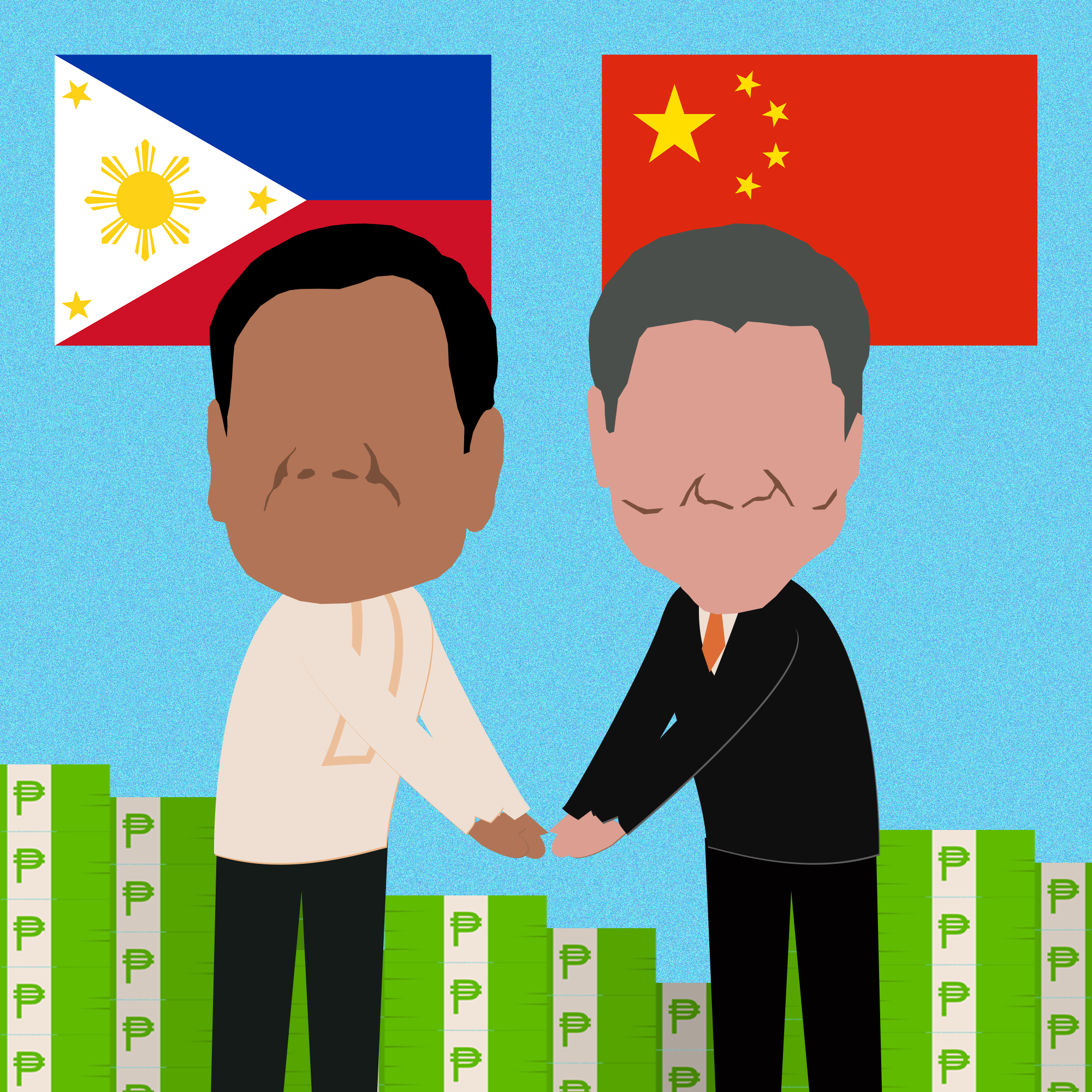
Today, power is shared among political dynasties, economic oligarchs, and foreign investors. Government acts on well-funded private interests instead of people’s welfare. Control is kept in several ways: owning media, public utilities, banks, and public infrastructures—controlling people’s visions and choices. Weak laws have only allowed powerful families to stay in charge, while historical revisionism is blurring what people remember about Martial Law. These are not sudden takeovers but are slow, steady practices that have consolidated elite power.
That scene at EDSA felt so jarring. I may be idealistic to think that a peaceful rally would not turn violent like it did at EDSA, but I was jolted to reality. I remember the smell of dust, sweat beading on our bodies, and the press of the crowd closing in around us. We were chanting slogans and holding placards bearing our demands when the police began to push forward. As soon as we saw a small opening through the police barricade, we ran as fast as we could. After seeing the police callous and merciless toward us, something changed in me.
Limping, I got off the bus slowly. I realized that my bruises and the swelling were small compared with the limp our country now carries–a stagger brought about by old concentrations of power and unfinished reforms. Still, as I force my sore legs to keep moving, I hold on to a simple hope: that the Philippines will keep walking toward genuine democracy, and that in time, the cramps that weaken it will finally begin to ease.
People Power was never meant to be a single day. If Filipinos want the next 40 years to look differently, we must continue showing up—in classrooms, in courtrooms, in factories, in fields, and on the streets—to transform the promise of EDSA into deeper, lasting change.