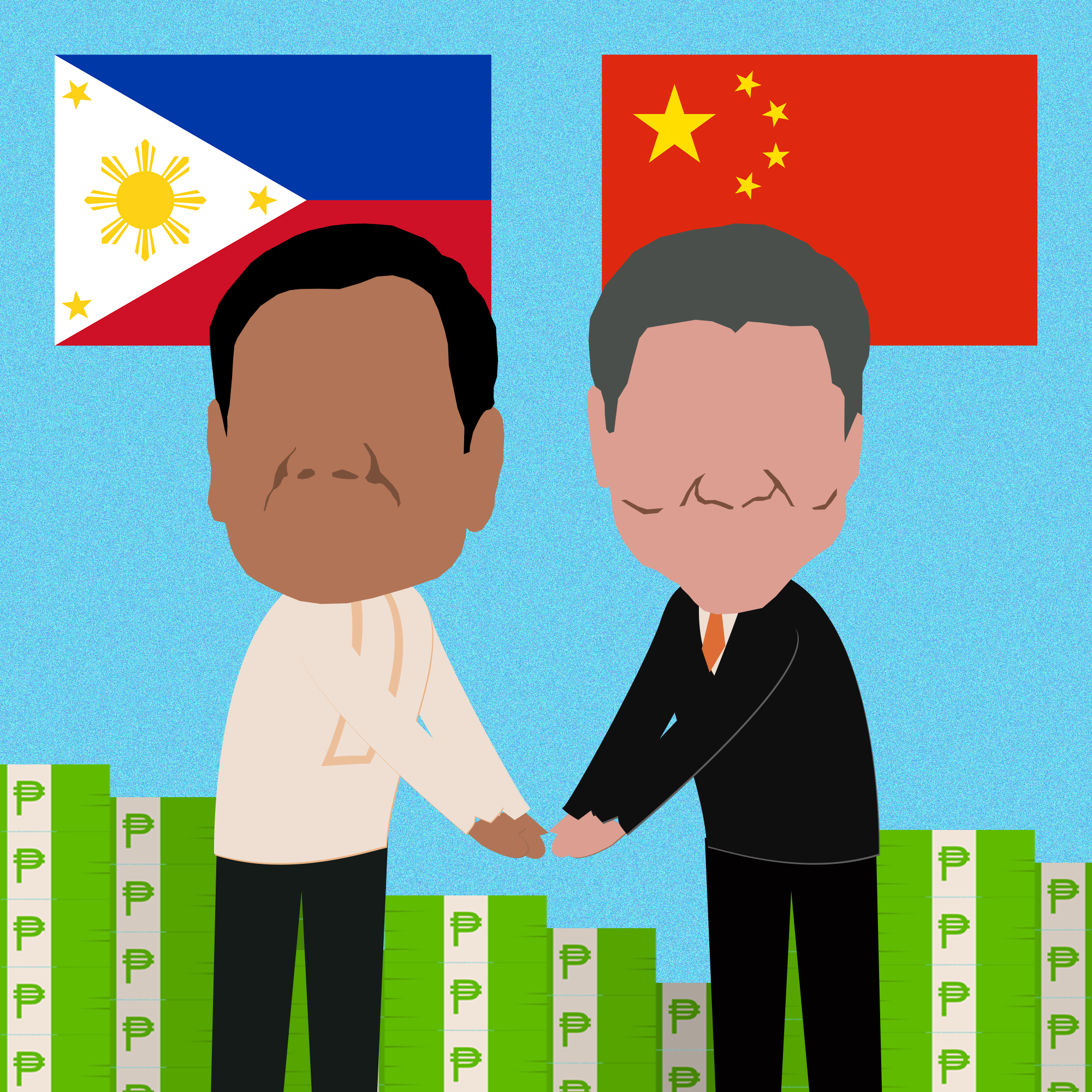
Imperial decline rarely proceeds quietly. The second Trump presidency’s bluster of protectionist tariffs, coercive bilateral deals, and escalating military deployments comes from its deeper crisis: an empire straining to preserve its dominance, but also accelerating the very forces of its decline.
Building an imperial order
The hegemonic strategy of the United States (US) since the Second World War has been to build and manage a multilateral order covering as many countries as possible. The economic foundations were laid with the International Monetary Fund (IMF) and World Bank twins established in 1944 and dominated by Washington until today. There was also the General Agreement on Tariffs and Trade (GATT) in 1947, later succeeded by the World Trade Organization (WTO) in 1994.
These were joined by an expanding array of intergovernmental organizations and political talk-shops, starting with the United Nations (UN) created in San Francisco in 1945 and its endless summits. Even in Europe, the Marshal Plan-driven Organisation for European Economic Co-operation (OEEC) set up in 1948 evolved into the Organisation for Economic Co-operation and Development (OECD) of today.
These US-driven economic and political institutions were crucially buttressed by overwhelming military power. The US military presence and adventures spanned the globe and included, in Europe, the US-led NATO (North Atlantic Treaty Organization) military alliance versus the socialist camp with the Soviet Union-led Warsaw Pact.
The US project unfolded in the face of formidable challenges. The socialist camp, led by the Soviet Union and China, posed a genuine rival to the capitalist order being pressed by the US. The post-war era was essentially duo-polar and split between these two superpowers. Most countries aligned with one or the other until a non-aligned movement of more than a hundred countries sought to chart an independent course. The Sino-Soviet split of the 1960s further complicated this balance with China emerging as a third pole of socialist revolution.
The collapse of the Soviet Union and supposedly of socialism in 1991 ushered in a period of American unipolarity, capitalist triumphalism, and proclamations about the “end of history.” In Europe, NATO expanded eastward starting with the Balkan wars; in the Middle East, the US flexed its military supremacy with the Gulf War. Overconfident about its hegemony, the United States made room for a rising China in the multilateral system of global capitalism – granting trade privileges, encouraging investment, and supporting its eventual entry into the WTO.
Yet this broad US project to universalize and dominate the global capitalist market order also deepened contradictions of inequality, dependency and geopolitical rivalry. In a sense, the so-called unipolar moment already contained the seeds of multipolarity, where many weaker capitalist powers and other countries would eventually begin asserting themselves.
Neoliberalism and overproduction
Enabled by rapid advances in information, communication, and transport technologies, neoliberal globalization accelerated in the 1980s and especially after the political upheavals since 1991. The US imposed trade and investment liberalization, deregulation, and privatization across the globe. Capitalist enterprises reorganized themselves in sprawling transnational value and supply chains and transformed the world into the most efficient profit-making global system in history.
Monopoly capital reaped the benefits from deeper labor exploitation, intensified global extraction of raw materials, and growing dependence on external markets. But the increased economic interconnectedness and interlinkages of countries also resulted in more complex mutual entanglements – with even rival powers bound together in intricate supply chains and financial circuits. Geopolitical confrontation today collides with dense economic entanglement which makes inter-imperialist rivalries more unstable than in earlier eras – and potentially more explosive.
Neoliberal globalization abetted China’s rise. The US, eager for access to cheap labor and vast markets, initially accommodated China and even supported its accession to the WTO. China seized the opportunity and used global integration to fortify its domestic economic base and extend its reach abroad.
As a result, China has already surpassed the Soviet Union in the scale of its economic challenge to the US. At its peak, the Soviet Union’s gross domestic product (GDP) was only about 50-60% of that of the US, declining to just 10-15% by the time of its dissolution in 1991. In contrast, China’s GDP today stands at roughly 65% and continues to rise, moreover supported by a far broader and more deeply integrated global economic presence. At a deeper level, China’s rapid ascent illustrated how globalization has sharpened capitalist competition and exacerbated the crisis of overproduction.
By the mid-2010s the world had become economically bipolar and dominated by the US and China, while politically multipolar with the US and its G7 allies countered by China, the BRICS (aka Brazil, Russia, India, China and South Africa), and assorted “middle powers.” This provided the impulse for Washington to seek new ways to consolidate its increasingly contested hegemony.
Evolving US Strategy
The “Asia pivot” of the Obama administration in 2011 signaled a shift. Declaring the 21st century “America’s Pacific Century,” Washington moved diplomatic, economic, and military resources from Europe and the Middle East toward the Asia-Pacific. The underlying aim was to contain China’s rise. The first Trump presidency advanced this focus – the second Trump presidency heightens and intensifies it. In the Philippines, for instance, the United States is rushing to expand its military bases, deploy troops, stockpile weapons, conduct endless war games, and mount open provocations against China.
This evolving strategy to contain China is not a signaling of strength but of concern. The first driver behind this is the weakening of US dominance, especially against China’s rapid rise and to some degree the growing assertiveness of so-called middle powers. Weighed down by overproduction, financialization and military overspending, the strategic decline of the US became clear since the early 2000s. The signs are plain.
The US domestic industrial base has diminished. Firms in electronics, semiconductors, automobiles, steel, textiles, and consumer goods relocated production abroad in search of lower costs and larger markets. This eroded US manufacturing and accelerated China’s rise. Since the 2000s – and especially with “Made in China 2025” – Beijing has prioritized climbing the value chain, with considerable success. It now competes in semiconductors, AI, 5G, cloud computing, and digital platforms. Chinese firms such as Huawei, Tencent, Alibaba, and ByteDance openly challenge American leadership in telecoms, e-commerce, and digital ecosystems.
American firms ironically helped make this possible. Apple, Microsoft, Dell, HP, and Intel were among the earliest and largest foreign investors in China’s tech-industrial base. Lured by profitable opportunities from cheap labor, a massive domestic market, and state-backed infrastructure, they set up supply chains, R&D partnerships, and manufacturing hubs. The capital, knowledge, and skills that poured into China enabled its leap into advanced industries.
The arrangement was mutually beneficial at the start. US companies reaped profits and efficiencies; China gained technology and global integration. But over time Chinese firms became more competitive against US firms: SMIC against Intel in semiconductors, Huawei’s HarmonyOS against Android and Windows in operating systems, Alibaba Cloud against Amazon and Microsoft in cloud services, and many others.
This is well-reflected in the rapid rise of Chinese overseas foreign direct investment (FDI) compared to the US. Between 1990 and 2024, the stock of US FDI abroad grew thirteen-fold from US$732 billion to US$9.8 trillion. Over the same period, China’s FDI stock expanded nearly 330 times from US$16.4 billion to US$5.3 trillion – fast approaching US levels. On top of this, perhaps two-thirds or more of countries – or anywhere from 120-145 of the 195 countries in the world – now trade more with China than with the US.
Multilateralism as convenience
The second driver is the weakening of control over the mechanisms of multilateralism. Institutions that once guaranteed Washington’s dominance are now apparently seen as increasingly constraining it due to rival powers asserting greater influence and alliances fraying. The US is not abandoning these frameworks altogether but appears to be engaging them more selectively – exploiting their legitimacy when useful, undermining them when not.
The tilt toward bilateral coercion seems to offer quicker, more flexible means of extracting concessions from dispensing with the slower, rule-based processes of multilateral bodies. In practice, this marks a shift from orchestrating a global order to dictating terms piecemeal – with multilateralism reduced to a tool of convenience rather than a central mechanism of US hegemony. The US still seeks control over strategic resources and markets but, especially under Trump, does so increasingly through bilateral and coercive deals.
Cost may be another, though secondary, factor. Sustaining the global multilateral architecture – from underwriting institutions to financing military containment – requires resources that a weakened US economy is increasingly less able, or perhaps less willing, to bear. In any case, the US now appears to be leveraging the threat of reduced financial contributions to multilateral institutions as a means of exerting coercive influence and pressuring them to align with its strategic preferences.
In terms of defense, Washington’s adjustment is towards more “burden-sharing” with allies in a move that doubles as market expansion for its arms industry while constraining the fiscal space of others. The US still wants to maintain a global military presence and the capacity to wage war on multiple fronts. But it advances this ambition by urging other countries to buy more American weaponry, in the process also feeding military Keynesianism.
Faced with eroding dominance, the US is doubling down on three interlinked fronts: strengthening its economy; containing its rivals; and escalating its military posture.
Shoring up economy
Reindustrialization and “competitiveness” are pitched as national renewal, but the real thrust is monopoly protection – domestically through financial deregulation, industrial policy, tariffs, and austerity, and internationally through resource control and coercive deals.
On the domestic front, industrial subsidies and trade protection are framed as national security – industrialization for technology conglomerates and the military-industrial complex instead of for the working class. Financial sector deregulation and loosening of controls on capital are moreover pitched as reducing bureaucratic overreach and unleashing economic growth. In contrast, the “Big Beautiful Act” further entrenches inequality. It slashes already inadequate funds for health, education, and social programs while giving sweeping tax breaks and financial advantages to corporations and the wealthiest households. Public resources are redirected upwards to the rich, not downwards to social needs.
Internationally, the US pushes for deeper market access abroad and tightening dependencies. It seeks to control critical technologies and resources. In semiconductors, AI, and advanced digital frontiers, it aims to enforce American dominance by restricting rivals’ access, weaponizing intellectual-property regimes, and prying open overseas markets while holding patents tight.
Washington still seeks to command the commanding heights. Energy dominance remains a goal. So too is securing lithium, cobalt, nickel, rare earths, and other critical minerals indispensable for digital, green, and military technologies. Food systems are kept under leverage through global grain trade, agrochemical monopolies, and agribusiness value chains. Dollar dominance and SWIFT are used as financial chokepoints to dictate the terms of global trade and investment. And the US arms industry, a permanent beneficiary, is promoted with zeal.
The emerging US thrust has two policy approaches: at home, aggressive protectionism skewed towards corporations and the wealthy, while austerity and precarious work bear down on the working class; and abroad, coercive bilateralism that leverages American power to extract concessions from weaker states.
It may be decades before this US effort shows any success in reversing a decline that itself unfolded over many years. In any case, there are strong headwinds. The crisis of overproduction still besets the global capitalist system. Rising inequality, fragile consumption, and worker discontent threaten the domestic economy. Unequal deals impose direct costs on underdeveloped countries while amplifying global economic instability and crisis, which disproportionately harm the world’s working classes and accelerates extractivism and environmental destruction. Rivals are already accelerating the creation of parallel supply chains, regional trading systems, and non-dollar financial networks.
Targets all round
Faced with challenges to its hegemony, the US is seeking to contain rivals and prevent the emergence of regional powers. China is the main economic, technological, and geopolitical target. Russia is to be confined to Europe and Central Asia. India, Brazil, South Africa, Iran, and other potential powers must be denied the chance to consolidate alternative blocs. BRICS expansion, Association of Southeast Asian Nations (ASEAN) autonomy, African Union initiatives or any meaningful South-South cooperation will be undermined. Divide-and-rule remains the guiding method and the US will keep exploiting local conflicts and rivalries to fragment potential centers of independent power, or even to justify military intervention.
This flank relies on intensified hybrid warfare – i.e., economic sanctions, technology embargoes, weaponized finance – alongside expanded military encirclement through bases, alliances, and proxy conflicts. Diplomatic capture ensures elites in underdeveloped countries are co-opted to align with US interests even against their regional neighbors.
These will only multiply contradictions. There will be pushback from rival and regional powers accelerating efforts at alternative institutions, currencies, and trade routes to bypass and sideline the US. The global context is however complicated by looming recessions marked by high inflation and stock-market downturns within a broader context of prolonged depression. The global working classes will bear the brunt of disruption, militarization, and resources diverted to support monopoly profits.
Fortress America
The US continues to sharpen its military posture with Trump declaring his commitment to “ensuring that the United States military possesses the most lethal warfighting capabilities in the world.” It is shoring up homeland defense and insists on uncontested dominance in the Western hemisphere. At the same time, Washington is modernizing its nuclear capabilities and accelerating the development, use and deployment of unmanned aircraft systems (drones) to maintain the permanent threat of projecting overwhelming violence anywhere in the world.
It escalates militarization in the US-defined “Indo-Pacific” to contain and roll back China. The Philippines exemplifies this with the greatly increased presence of US troops, expanded basing, stockpiles of weapons, new ammunition production and fuel depots, and the creation of an “integrated army” under the guise of interoperability with multinational forces.
Still, the US appears serious in offloading more of its military costs to its allies in supporting the global capitalist system. Europe is being made to foot more of the bill in facing Russia, and allies in Asia in facing China – yet the US will remain the major beneficiary of geopolitical and economic dividends. There is a stark question: at what scale, where, and when will rising inter-imperialist contradictions ignite into open conflict?
Hegemony in crisis
The second Trump presidency deepens rather than resolves the crises of US imperialism, sharpening contradictions both at home and abroad. Its explosive mix of aggressive protectionism, coercive bilateralism, and military escalation will aggravate global instability and squeeze working people everywhere yet with no certainty of averting US decline. The world faces a turbulent period in which inter-imperialist rivalries sharpen, the costs are borne by working people everywhere, and the dangers of systemic breakdown become ever greater – alongside the prospects for popular resistance. ###